
Blog
Latest Post
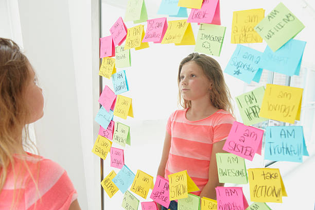
As Mary Poppins once said, “A spoonful of sugar makes the medicine go down.” In other words, your kids are more likely to do challenging things—like reading—if you make them fun! There’s a lot of information out there about how our kids need to read more. Maybe you’ve tried scheduling reading time or making special trips to the library, but here are some fun, sneaky ways to work reading into your day: Turn on the subtitles! Sometimes I do this just to make sure I don’t miss any dialogue from my favorite shows, but your kids will benefit from hearing and seeing the words at the same time. (One Minute Reader does this automatically!) Play word games. Any game that has cards with questions that players have to read will...make your kids read! Think Trivial Pursuit or Apples to Apples. And if they start fighting over the rules, suggest that they read the instructions! If your kids are big Marvel fans, find the corresponding comic books for the recent films. Make it a rule that they have to read the related book (or the comic book) before they see the movie! Some popular books that became movies: the Harry Potter series, Diary of a Wimpy Kid , and A Series of Unfortunate Events . Ask kids to help in the kitchen by reading a recipe, or while on a car ride by looking for signs with the names of landmarks. Have them be in charge of reading the menu to the table when you’re out at a restaurant, or while doing anything that involves written directions. Even having kids explain what they see in visual directions develops their comprehension. Audiobooks, anyone? Yes, you listen to them in the car or at the gym, but listening to an audiobook with your kids is a great way to generate conversation about characters and feelings. And experts agree that listening to an audiobook is just as good as reading an actual book. Be pen pals! Send your child notes in their lunchbox or stick them on their bathroom mirror. Encourage them to respond or create their own notes to send to their favorite people—or themselves! Chances are, working these simple strategies into your day will make reading seem like less of a chore, and more fun! Let us know how you get your kids to read more!
Highlighted Posts

Explore how One Minute Reader turns screen time into a productive reading experience. Sign up for a free trial today!

Discover 5 meaningful Teacher Appreciation Week ideas for students, including thank-you letters, video tributes, DIY gifts, classroom decorations, and volunteering tips to honor teachers.
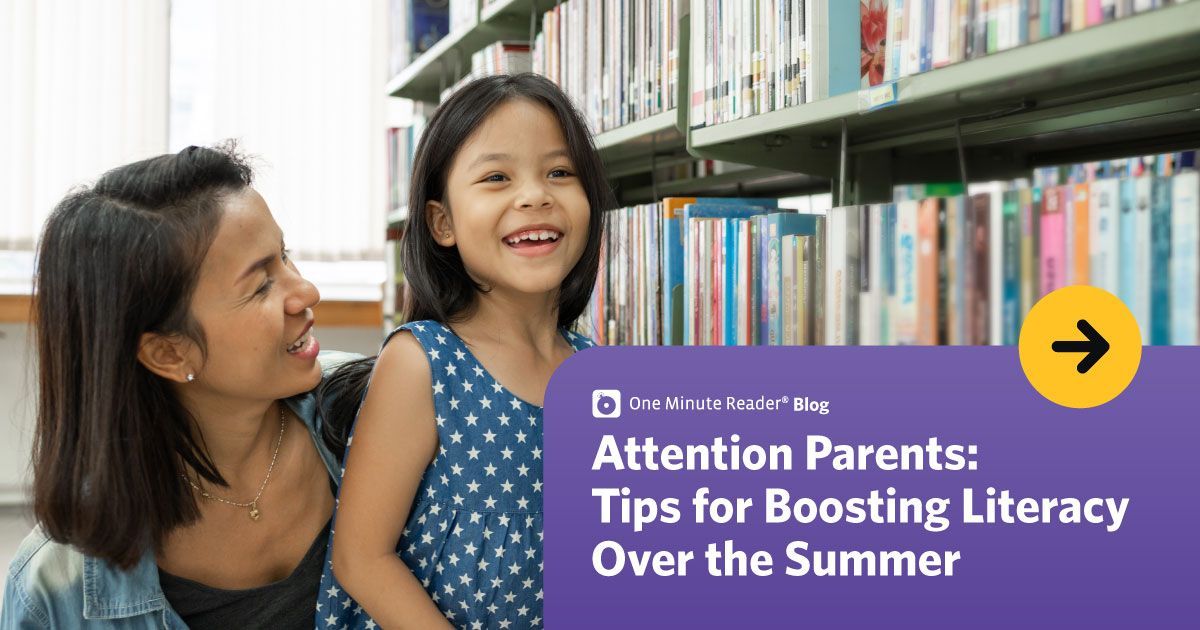
Summer calendars tend to get very busy, despite many parents' best attempts to give their children plenty of unstructured free time. Quiet time to read might not earn a spot on the family calendar, but it should be highly prioritized nonetheless. Here are some tips to entice your kids to make reading part of their daily summer routine.
All Posts
As Mary Poppins once said, “A spoonful of sugar makes the medicine go down.” In other words, your kids are more likely to do challenging things—like reading—if you make them fun! There’s a lot of information out there about how our kids need to read more. Maybe you’ve tried scheduling reading time or making special trips to the library, but here are some fun, sneaky ways to work reading into your day: Turn on the subtitles! Sometimes I do this just to make sure I don’t miss any dialogue from my favorite shows, but your kids will benefit from hearing and seeing the words at the same time. (One Minute Reader does this automatically!) Play word games. Any game that has cards with questions that players have to read will...make your kids read! Think Trivial Pursuit or Apples to Apples. And if they start fighting over the rules, suggest that they read the instructions! If your kids are big Marvel fans, find the corresponding comic books for the recent films. Make it a rule that they have to read the related book (or the comic book) before they see the movie! Some popular books that became movies: the Harry Potter series, Diary of a Wimpy Kid , and A Series of Unfortunate Events . Ask kids to help in the kitchen by reading a recipe, or while on a car ride by looking for signs with the names of landmarks. Have them be in charge of reading the menu to the table when you’re out at a restaurant, or while doing anything that involves written directions. Even having kids explain what they see in visual directions develops their comprehension. Audiobooks, anyone? Yes, you listen to them in the car or at the gym, but listening to an audiobook with your kids is a great way to generate conversation about characters and feelings. And experts agree that listening to an audiobook is just as good as reading an actual book. Be pen pals! Send your child notes in their lunchbox or stick them on their bathroom mirror. Encourage them to respond or create their own notes to send to their favorite people—or themselves! Chances are, working these simple strategies into your day will make reading seem like less of a chore, and more fun! Let us know how you get your kids to read more!

Today’s guest post features the writing of Maria Hughes. Maria is a blogger, a parent, and an online publisher for www.childrensbookstore.com. She enjoys blogging and is very involved in the world of children’s books and child literacy. In this post, she sheds light on seven famous individuals who had dyslexia. 7 Influential People with Dyslexia By Maria Hughes Children with dyslexia are often misunderstood and mistreated. Parents and children constantly exposed to negative feedback need to remember that they are not alone, and their situation is far from hopeless. There are hundreds of people with dyslexia that have reached astronomical success, and here are just a few of them: 1. Albert Einstein Albert Einstein, without doubt, had one of the most important minds in history. He may have had a hard time remembering what month it was, or how to tie his shoes, but Einstein solved some of the most intricate mathematical equations of all time and affected history with his discoveries—it didn’t even matter that he was dyslexic. 2. Leonardo Da Vinci If your child ever believes that they can’t do something because they are dyslexic, tell them about Leonardo Da Vinci. Not only did he create the first blueprints for vehicles and contraptions hundreds of years ahead of his time, he was also an anatomist, sculptor, painter, musician, botanist, writer, mathematician, engineer, and least consequential of all, he was dyslexic. 3. Thomas Edison Thomas Edison didn’t do well in school. He only went for about three months, officially, and had a wandering mind, did poorly with math, words, and speech. Edison had dyslexia—but that wasn’t the only thing he had. He had passion, and he applied that passion to his work, making him the inventor of the phonograph and the light bulb, among other devices that changed the world. 4. Walt Disney If your kids watch any of the shows on the Disney channel, like Mickey Mouse or Minnie Mouse or any of the Disney characters, or have ever been or wanted to go to Disney Land, you should be the first to tell them that none of that would be possible without Walt Disney—somebody who had dyslexia. Walt Disney had to work hard for everything that he achieved, going to two schools at one time despite his learning disability, and creating one of the biggest brands the world has ever seen. 5. Whoopi Goldberg Your children might not be familiar with much of Whoopi Goldberg’s work, but if you ever sit down to watch The View while they are around, you can point her out to them. Goldberg didn’t know that she had dyslexia until she was an adult, long after she dropped out of school. Now she has a very successful career and has overcome that which used to keep her down. 6. Orlando Bloom While your children might not know who Whoopi Goldberg is, all you have to do is put on one of the Lord of the Rings or the Pirates of the Caribbean films to see Orlando Bloom. He struggled through school and kept his dyslexia a secret until very recently, opening up so that he could give advice to parents and kids struggling with dyslexia. 7. Cher Cher is another strong woman that overcame dyslexia. Cher dropped out of school at age 16 and didn’t learn that she had dyslexia until she was 30, when her daughter was being tested for learning disabilities. One of the most powerful and talented singers, Cher has battled against dyslexia throughout her career and has come out the victor.

Learning to read is one of the most important milestones in a child’s education. Yet many parents are surprised to discover that reading is far more complex than simply recognizing words on a page. Reading involves multiple skills working together, and children develop these skills over time through instruction, practice, and encouragement. Understanding the basics of reading development can help parents better support their children and feel more confident as partners in their literacy journey. What Is Reading? According to Reading Rockets , reading involves three essential processes happening at the same time: Word recognition: identifying the words in print. Comprehension: understanding the meaning of those words. Fluency: reading accurately, smoothly, and with expression. When these skills work together, children can focus on understanding and enjoying what they read rather than struggling to figure out individual words. Building the Foundation: Word Recognition Before children can become confident readers, they must learn how written language represents spoken language. This includes several important skills: Phonemic Awareness Phonemic awareness is the ability to hear and manipulate individual sounds in words. For example, a child learns that the word “feet” contains three sounds: /f/, /ē/, and /t/ (Reading Rockets, n.d.). Understanding Letter-Sound Relationships Children learn that letters and combinations of letters represent specific sounds. This understanding, known as the alphabetic principle, helps children connect print to spoken language (Reading Rockets, n.d.). Decoding Decoding is the ability to use letter-sound knowledge to sound out unfamiliar words. This skill allows children to tackle new words independently rather than relying solely on memorization (Reading Rockets, n.d.). Building a Sight Vocabulary As children gain experience with reading, they begin recognizing common words automatically. This automatic recognition, called a sight vocabulary, helps them read more efficiently and with less effort. Developing Strong Comprehension Reading is only meaningful if children understand what they are reading. Comprehension grows through a combination of experiences and language development. Children benefit from: Broad background knowledge about the world Rich spoken and written vocabulary Understanding how language works Familiarity with different types of texts Strategies for monitoring and repairing understanding when meaning breaks down This is one reason why conversations, storytelling, and exposure to a wide variety of books are so important. Every new experience helps children build knowledge they can use to understand future texts. Why Fluency Matters Fluent readers read accurately, at an appropriate pace, and with natural expression. Fluency is important because it frees up mental energy for understanding the text rather than focusing on individual words. Children develop fluency by: Reading accurately with a model Increasing reading rate gradually Practicing expressive reading Regular reading practice, especially with books that are appropriately challenging, helps build fluency over time. Motivation is Key One aspect of reading development that is sometimes overlooked is motivation. Children who enjoy reading are more likely to spend time reading, and that practice helps them become stronger readers. Reading Rockets notes that children need opportunities to: Experience the enjoyment of reading Share reading with others Explore topics that interest them Read for different purposes, including fun and learning Engage with a variety of genres and formats Parents can nurture motivation by letting children choose books, reading together regularly, and celebrating progress rather than focusing solely on performance. Reading Development is not Linear One of the most reassuring things for parents to know is that children do not master one skill and then move on to the next. Instead, they develop word recognition, comprehension, fluency, and motivation simultaneously, with growth occurring at different rates. As a result, children may excel in some areas while needing additional support in others. This is a typical part of the learning process. How Parents Can Support Reading Growth You do not need to be a reading specialist to help your child become a successful reader. These daily habits can make a significant difference: Read aloud together every day Talk about stories and ask questions Introduce new vocabulary in everyday conversations Encourage your child to read books that match their interests Create a positive, pressure-free reading environment Celebrate effort and persistence The goal is not just to teach children how to read but to help them become lifelong readers who find meaning, knowledge, and enjoyment in books. One Minute Reader can Help! For parents looking to support reading at home, One Minute Reader offers structured, engaging practice that helps children build fluency, comprehension, vocabulary, and confidence in reading. The program uses short, high-interest nonfiction passages, audio support, repeated reading, and progress tracking to help children experience measurable success while developing stronger reading skills. Because sessions are brief and designed to encourage independent practice, One Minute Reader can fit easily into busy family schedules while giving parents a practical tool to reinforce the foundational reading skills their children need to become successful, motivated readers. Start your free trial today! Reference Reading Rockets. Reading 101 for Parents: Reading Basics. Retrieved from https://www.readingrockets.org/literacy-home/reading-101-guide-parents/reading-basics

Does your child seem more focused on rate than on overall reading improvement? As young readers build fluency, it’s natural for them to them to try to read faster. When they become too focused on speed, however, they often lose accuracy and expression. Reading fluently means reading accurately, expressively, and at an appropriate rate. In other words, fluency means reading “like you speak,” at a rate others can easily understand. The ultimate goal of reading is always comprehension, not speed. How can you slow down your speedy reader? Here are some ideas we've collected over the years: Read along with your child and tap the table twice for every period and once for every comma. This helps them internalize how long to pause for punctuation. Then teach them to tap the table in the same manner as they read alone. For an extra challenge, change roles and have your child tap the table accordingly while you read the story to them. Teach your child to take a breath before each punctuation mark. Demonstrate the difference by modeling fast reading and then reading with expression. Ask: "Which way of reading was easier to listen to? Which way made it easier to understand the meaning of the story?" Show your child a video such as those found on Videos | National Geographic Kids and direct them to pay attention to the narrator’s voice. Encourage them to sound like the narrator when they read—to have a clear voice that people can easily understand. Play “News Reporter” and have your child practice reading a passage like newscaster. Post a humorous sign in your reading space with the message you want to get across, such as, "Slow down, or you will be pulled over for speeding!" If your child is working in One Minute Reader or a program with a timed-reading component, try the following: Have your child read the passage to you, untimed and with correct phrasing, before the timed reading. Emphasize comprehension by having your child retell the story to you before the timed reading. In One Minute Reader, reduce the number of read-alongs . With less audio support, developing readers will need to work harder on word recognition, forcing them to slow down and learn to read the words accurately. If you’re taking remedial actions like reducing the number of read-alongs, it’s important to try just one remedial action at a time and give your child time to adjust. Often a nudge in the right direction is enough to help them slow down. It is exciting for young learners to increase the rate at which they can read, but becoming truly fluent is inherently more rewarding. When readers are fluent with the text, they have enough mental energy left to comprehend. As we already know, comprehension is what makes reading enjoyable and life-changing. Do you have additional suggestions for slowing down your speed readers? We’d love to hear what’s worked for you. Click here to share!

Help your child improve reading comprehension with practical strategies for fluency, vocabulary, and understanding—and learn how One Minute Reader can help.
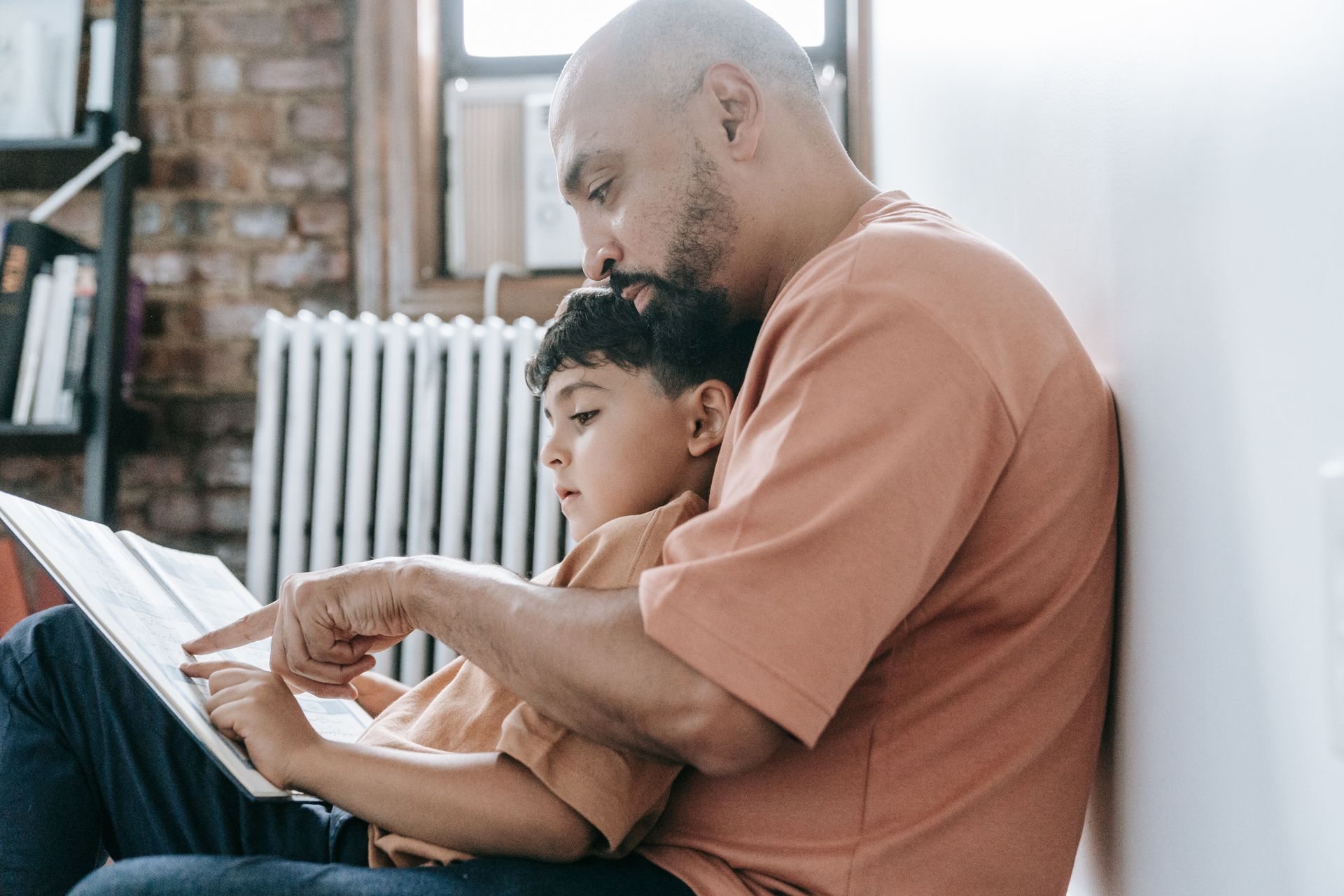
Modeling Reading: Learning by Doing Together Children learn best when they can see, hear, and practice alongside someone who already knows how to perform the skill. Reading aloud together is a perfect example of this kind of modeling. When your child hears you read smoothly and expressively, they begin to understand what good reading sounds like— and they get to experience what it feels like to be a good reader themselves because you are supporting them in the very moment they are practicing. This approach is at the heart of a technique called the Neurological Impress Method developed by Dr. Robert G. Heckelman in the 1960s. What Is the Neurological Impress Method? The Neurological Impress Method is simple and powerful: You and your child read the same text aloud together. You stay close—both physically and in pacing. Your child hears fluent reading while actively participating. You gently guide the pace, staying just slightly ahead, helping your child keep up without pressure. Research shows just how effective this method can be ( Young et al., 2018 ). In one study, middle school students who were several years behind in reading made nearly two years of progress after short, consistent sessions using this method ( Heckelman, 1969 ). It’s clear that consistent, supported practice makes a real difference. Why It Works Reading can feel intimidating for children who struggle. But when they read with you: They don’t feel alone. They hear fluent reading in real time. They practice without fear of making mistakes. They experience success in reading. They build confidence. You may already know the feeling that comes with supportive practice. Believe it or not, many of us have experienced something similar before—without even realizing it. Think about singing along to a song you don’t fully know. At first, you might mumble or guess at the words. But as you keep singing along, something happens: You start picking up the words. You gain confidence. And most importantly…you have more fun and feel less pressure. That’s exactly what happens with the Neurological Impress Method. How to Try It at Home You don’t need anything fancy to get started—just a book, a little time, and a willingness to work together. Sit side-by-side: Make sure your child can easily see the text with you. Choose the right book: Pick something interesting, even if it’s slightly challenging. Read together: Start reading at the same time, keeping a steady, supportive pace. Keep it positive: If your child makes a mistake, keep going. Model the correct reading naturally without pressure. Make it short and sweet: 10–15 minutes is plenty. Consistency matters more than length. Don’t Forget the Most Important Part: Have Fun! Reading shouldn’t feel like a chore—it should feel like time well spent together. Use silly voices. Laugh at funny parts. Celebrate progress, no matter how small. When reading becomes enjoyable, children are much more likely to stick with it and grow. A Small Habit That Builds Big Confidence Just like teaching your child to clean up, ride a bike, or tie their shoes, reading is something you can show them and do with them. By reading aloud together, you’re not just improving their skills—you’re building their confidence, strengthening your connection, and creating positive experiences that last. So, grab a book, sit close, and start reading—together. References: Heckelman, R. G. (1969). A neurological-impress method of remedial-reading instruction. Academic Therapy , 4(4), 277–282. Young, C., Pearce, D., Gomez, J., Christensen, R., Pletcher, B., & Fleming, K. (2018). Read two impress and the neurological impress method: Effects on elementary students’ reading fluency, comprehension, and attitude. The Journal of Educational Research, 111(6), 657-665.
Ready to see an improvement in your child's reading?
Sign up today and get seven days for FREE.
One Minute Reader is just $8 per month after your free trial.