Modeling Reading: Learning by Doing Together
Children learn best when they can see, hear, and practice alongside someone who already knows how to perform the skill.
Reading aloud together is a perfect example of this kind of modeling.
When your child hears you read smoothly and expressively, they begin to understand what good reading sounds like—and they get to experience what it feels like to be a good reader themselves because you are supporting them in the very moment they are practicing.
This approach is at the heart of a technique called the Neurological Impress Method developed by Dr. Robert G. Heckelman in the 1960s.
What Is the Neurological Impress Method?
The Neurological Impress Method is simple and powerful:
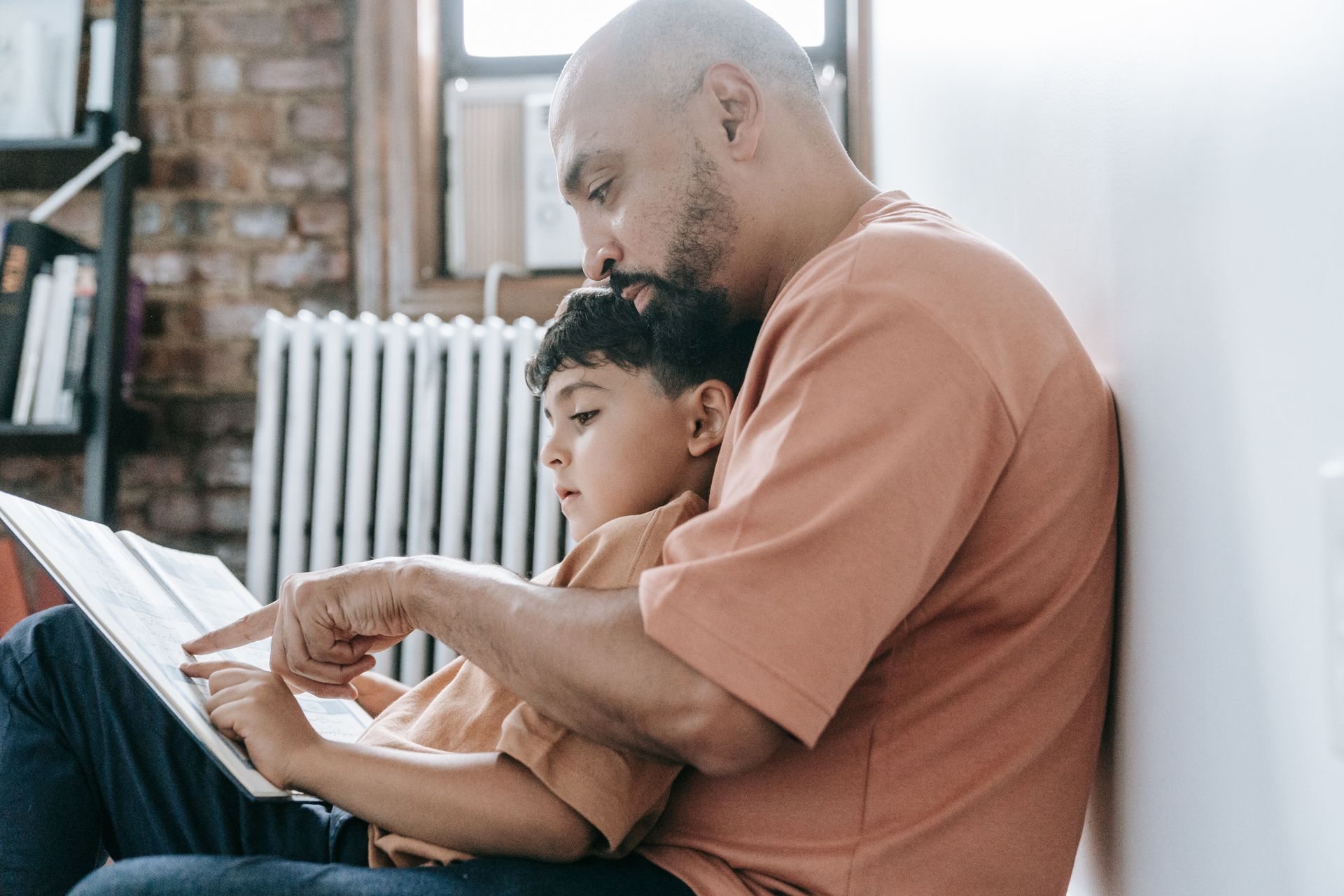
- You and your child read the same text aloud together.
- You stay close—both physically and in pacing.
- Your child hears fluent reading while actively participating.
- You gently guide the pace, staying just slightly ahead, helping your child keep up without pressure.
Research shows just how effective this method can be (Young et al., 2018). In one study, middle school students who were several years behind in reading made nearly two years of progress after short, consistent sessions using this method (Heckelman, 1969). It’s clear that consistent, supported practice makes a real difference.
Why It Works
Reading can feel intimidating for children who struggle. But when they read with you:
- They don’t feel alone.
- They hear fluent reading in real time.
- They practice without fear of making mistakes.
- They experience success in reading.
- They build confidence.
You may already know the feeling that comes with supportive practice. Believe it or not, many of us have experienced something similar before—without even realizing it.
Think about singing along to a song you don’t fully know. At first, you might mumble or guess at the words. But as you keep singing along, something happens:
- You start picking up the words.
- You gain confidence.
- And most importantly…you have more fun and feel less pressure.
That’s exactly what happens with the Neurological Impress Method.
How to Try It at Home
You don’t need anything fancy to get started—just a book, a little time, and a willingness to work together.
- Sit side-by-side: Make sure your child can easily see the text with you.
- Choose the right book: Pick something interesting, even if it’s slightly challenging.
- Read together: Start reading at the same time, keeping a steady, supportive pace.
- Keep it positive: If your child makes a mistake, keep going. Model the correct reading naturally without pressure.
- Make it short and sweet: 10–15 minutes is plenty. Consistency matters more than length.
Don’t Forget the Most Important Part: Have Fun!
Reading shouldn’t feel like a chore—it should feel like time well spent together.
- Use silly voices.
- Laugh at funny parts.
- Celebrate progress, no matter how small.
When reading becomes enjoyable, children are much more likely to stick with it and grow.
A Small Habit That Builds Big Confidence
Just like teaching your child to clean up, ride a bike, or tie their shoes, reading is something you can show them and do with them. By reading aloud together, you’re not just improving their skills—you’re building their confidence, strengthening your connection, and creating positive experiences that last.
So, grab a book, sit close, and start reading—together.
References:
Heckelman, R. G. (1969). A neurological-impress method of remedial-reading instruction.
Academic Therapy, 4(4), 277–282.
Young, C., Pearce, D., Gomez, J., Christensen, R., Pletcher, B., & Fleming, K. (2018). Read two impress and the neurological impress method: Effects on elementary students’ reading fluency, comprehension, and attitude. The Journal of Educational Research, 111(6), 657-665.